Why Your Winter Renovation Needs a Pest Inspection Before the First Hammer Swings
July 12, 2026
Angie Neal
Winter in Southeast Queensland is renovation season. The humidity drops, the temperatures are comfortable for outdoor work, and tradies have more availability before the spring rush kicks in. It’s the perfect time to tackle that kitchen update, knock out a bathroom, extend a deck, or finally add the granny flat you’ve been talking about for three years.
But before the first wall comes down or the first footing gets dug, there’s a step that most homeowners — and plenty of builders — skip entirely: a pest inspection.
It’s not the most exciting part of a renovation. Nobody’s pinning pest reports to their Pinterest board. But it might be the most important one. Because what’s hiding inside your walls, under your floors, or beneath your footings can turn a $30,000 kitchen renovation into a $50,000 problem before you’ve even chosen your benchtop.
What Renovations Actually Disturb
Most homeowners think of renovations as a process of improving their home. And they are. But from a pest management perspective, renovations are also a process of disruption — and that disruption creates risk.
When you remove cladding, pull out wall linings, or strip back flooring, you’re exposing the structural skeleton of your home. Timber framing, bearers, joists, and sub-floor spaces that haven’t seen daylight in decades are suddenly visible. And sometimes, what you find isn’t pretty.
Subterranean termites — the species responsible for the vast majority of structural damage in Australian homes — build their colonies inside wall cavities, behind plaster, and within floor structures. A wall that looks perfectly fine from the outside can be riddled with termite galleries on the inside. Removing that wall without knowing what’s behind it can disturb an active colony, sending thousands of termites scattering into other parts of the structure where they’ll regroup and continue feeding.
Digging new footings or trenching for plumbing and drainage creates a different kind of risk. Many homes — particularly older homes in Brisbane and the Moreton Bay region — rely on chemical soil barriers for termite protection. Those barriers work by treating the soil around the perimeter with termiticide, creating a zone that termites won’t cross. Excavation work can break that barrier entirely, leaving gaps that termites will exploit. And once the barrier is broken, the protection doesn’t repair itself.
Deck replacements and extensions are another common renovation that creates exposure. Decking attached to the main structure provides a direct timber-to-ground pathway that termites can follow straight into your home. If the existing deck timbers are already compromised, pulling them off can reveal damage that extends into the house itself.
The Cost of Discovery Mid-Build
Finding termite damage during a renovation is one of the most expensive surprises a homeowner can face. And it happens more often than people think.
Here’s how it typically plays out. The builder starts demolition. A wall comes down, or flooring gets pulled up. Behind it, the timber framing is hollowed out, soft to the touch, or visibly tracked with mud tubes. Work stops. The builder can’t continue until the infestation is assessed and treated, because building on top of active termite damage isn’t just unwise — it can create liability issues for everyone involved.
Now you’re paying for a pest professional to inspect and treat the affected area before work can resume. Treatment costs can range from $1,500 to $5,000 depending on the extent of the infestation. But the bigger cost is often the structural repair. If load-bearing timber has been compromised — stumps, bearers, floor joists, or wall framing — repair bills start at $5,000 and can climb well beyond $30,000 for severe damage. Add that to your existing renovation budget and the numbers change fast.
There’s also the time cost. Termite treatment and structural repairs can delay a renovation by weeks. If you’re living off-site during the build, or if tradies need to be rescheduled, those delays compound. What was supposed to be a six-week project becomes a ten-week one, and the flow-on cost of extended timelines — temporary accommodation, rescheduled trades, storage fees — adds up quietly.
A pre-renovation pest inspection costs between $250 and $500. Against the potential cost of a mid-build termite discovery, it’s not even close.
What a Pre-Renovation Pest Inspection Actually Covers
A professional pre-renovation pest inspection goes beyond a standard annual check. It’s specifically scoped to assess the areas that your renovation will disturb.
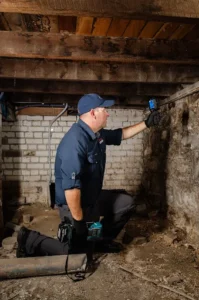
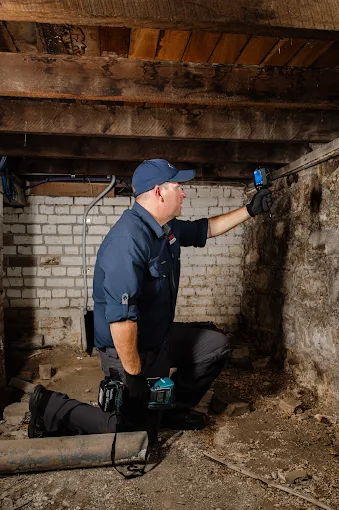
A qualified pest technician will inspect the subfloor, wall cavities (where accessible), roof space, external perimeter, and any timber structures connected to the home. They’ll look for active termite activity, previous damage, and conditions that increase risk — things like moisture accumulation, timber-to-ground contact, inadequate drainage, and compromised existing barriers.
For larger renovations, the inspection should also cover the planned excavation zones. If footings are being dug, extensions are being built, or the existing slab is being modified, the pest technician can advise on whether current termite barriers will be affected and what protection needs to be reinstated during or after construction.
In Queensland, the building code requires termite management systems for new construction and significant renovations. Under Australian Standard AS 3660.1, any building work that involves new footings, slabs, or structural changes must include compliant termite protection. Councils require certification — typically via Form 16 — confirming that termite management meets the Building Code of Australia’s performance provisions. A pre-renovation pest inspection ensures you know what you’re working with before those compliance requirements come into play, rather than scrambling to meet them after problems surface.
The inspection report gives you — and your builder — a clear picture of the property’s termite status before a single nail gets pulled.
Why Builders and Tradies Should Care Too
This isn’t just a homeowner issue. Builders, carpenters, plumbers, and electricians working on renovation projects have skin in this game as well.
When a builder opens up a wall and finds active termite damage, the situation gets complicated. Continuing to build over compromised framing creates structural risk. If the damage isn’t addressed properly and the homeowner discovers further deterioration down the line, the builder can face questions about their duty of care.
The smarter approach — and one that protects everyone — is recommending a pre-renovation pest inspection before work begins. For builders, it’s a form of risk management. You’re not taking ownership of the pest problem; you’re ensuring that site conditions are known before you start. If termites are found, the homeowner addresses it with a pest professional before construction proceeds. If the site is clear, you’ve got documentation confirming it.
For tradies working under or around older homes — particularly the post-war timber-framed Queenslanders and character homes common across Brisbane’s inner and middle suburbs — this is especially relevant. These homes were built before modern termite management standards existed. Many have had multiple rounds of renovations, extensions, and plumbing changes over the decades, each one potentially disrupting whatever termite protection was originally in place.
Recommending a pest inspection before you start doesn’t slow the job down. It protects it.
Why Winter Is the Right Time to Do This
There’s a reason this conversation matters now, not in October.
Winter in Southeast Queensland is when renovation activity ramps up. The weather is ideal for outdoor work — decking, cladding, extensions — and tradies generally have more availability before the summer rush. If you’re planning a project that will run through spring, winter is when the preparation happens.
It’s also when termite inspections are most effective. Thermal imaging technology — used by qualified technicians to detect active colonies behind walls and within subfloors — performs better in cooler weather. The temperature contrast between the heat generated by a termite colony and the surrounding cooler structure makes nests easier to identify. A colony that might not stand out on a 35-degree day in January can be clearly visible at 15 degrees in July.
Booking your pest inspection in winter also gives you time to act on the results before construction begins. If treatment is needed — whether that’s localised chemical treatment, installing a baiting system, or repairing and reinstating barriers — it can be completed before the builder starts. The renovation proceeds on clean foundations, with no nasty surprises waiting inside the walls.
National Pest Solutions, a family-owned pest management company based in Southeast Queensland, specialises in pre-renovation termite assessments across Brisbane, the Moreton Bay region, Caboolture, and the Sunshine Coast. With over 35 years of industry expertise and qualified technicians equipped with thermal imaging, they identify the problems before your renovation uncovers them — saving time, money, and the structural integrity of your project.
Start Your Renovation the Right Way
A renovation should improve your home, not reveal its hidden problems at the worst possible moment. A pre-renovation pest inspection is a few hundred dollars and a few hours. The peace of mind — and the potential savings — are worth many times that.
If you’re planning a winter renovation in Southeast Queensland, make the pest inspection the first step, not an afterthought. Talk to your builder about it. And if they haven’t raised it, raise it yourself.
Get a free pest assessment from National Pest Solutions before the first hammer swings. Your renovation — and your budget — will thank you.